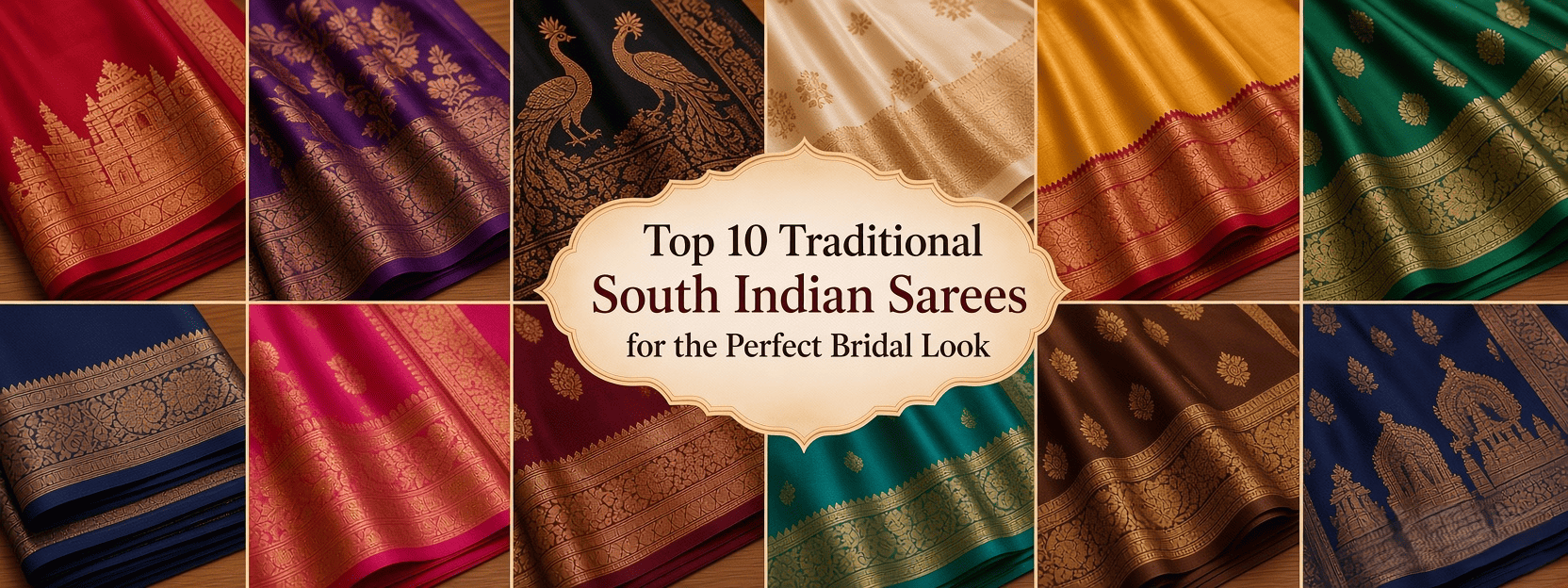
Top 10 Traditional South Indian Sarees for the Perfect Bridal Look
South Indian weddings can run for hours, sometimes days, filled with rituals, quick outfit changes, family photos, and a lot of movement. That’s why a South Indian bridal saree isn’t just about looking grand for a few minutes. It has to drape well, hold its shape, feel comfortable through long ceremonies, and still look exquisite in close-up pictures.
Below are ten of the most loved traditional South Indian bridal sarees, along with what makes each weave special and how to decide which one belongs in your wedding wardrobe.
What makes South Indian bridal sarees stand out?
Even within India’s vast saree traditions, South Indian wedding sarees tend to have a few shared strengths:
- Heritage craftsmanship: Many of these weaves come from long-standing weaving clusters and family-run looms.
- Silk that holds structure: Bridal silks are often chosen for their weight, shine, and the way they keep pleats crisp.
- Zari and borders with meaning: Temple-inspired motifs, paisleys, peacocks, and traditional borders aren’t random decoration, they’re tied to prosperity, protection, and auspiciousness.
- Heirloom potential: With the right care, a good silk saree can be worn again and passed down.
10 best traditional South Indian bridal sarees
1) Kanchipuram (Kanjivaram) silk saree
If there’s one saree that reads “bridal” instantly in South India, it’s the Kanchipuram silk saree from Tamil Nadu. These sarees are known for their rich mulberry silk, bold borders, and luminous zari work.
What to love:
- Strong, sculpted drape, great for structured pleats and a defined pallu
- Classic motifs like temples, checks, florals, and peacocks
- A celebratory look that photographs beautifully in warm lighting
Best for: the main wedding ceremony (muhurtham), especially if your jewelry is traditional and heavy.
Smart styling tip: If your saree has a wide border and dense zari, keep the blouse cleaner, let the weave do the talking.
2) Mysore silk saree
Elegant, fluid, and understated in the best way, Mysore silk sarees (from Karnataka) are prized for their smooth finish and graceful fall. They’re often chosen by brides who want silk richness without the visual “weight” of very heavy zari.
What to love:
- Soft drape that feels easier to manage during long events
- A refined, minimal look that still reads formal and bridal
- Excellent canvas for statement jewelry
Best for: reception, engagement, or a “classic silk” moment without extreme ornamentation.
Smart styling tip: Pair with a high-neck or elbow-sleeve blouse for a polished, old-school bridal silhouette.
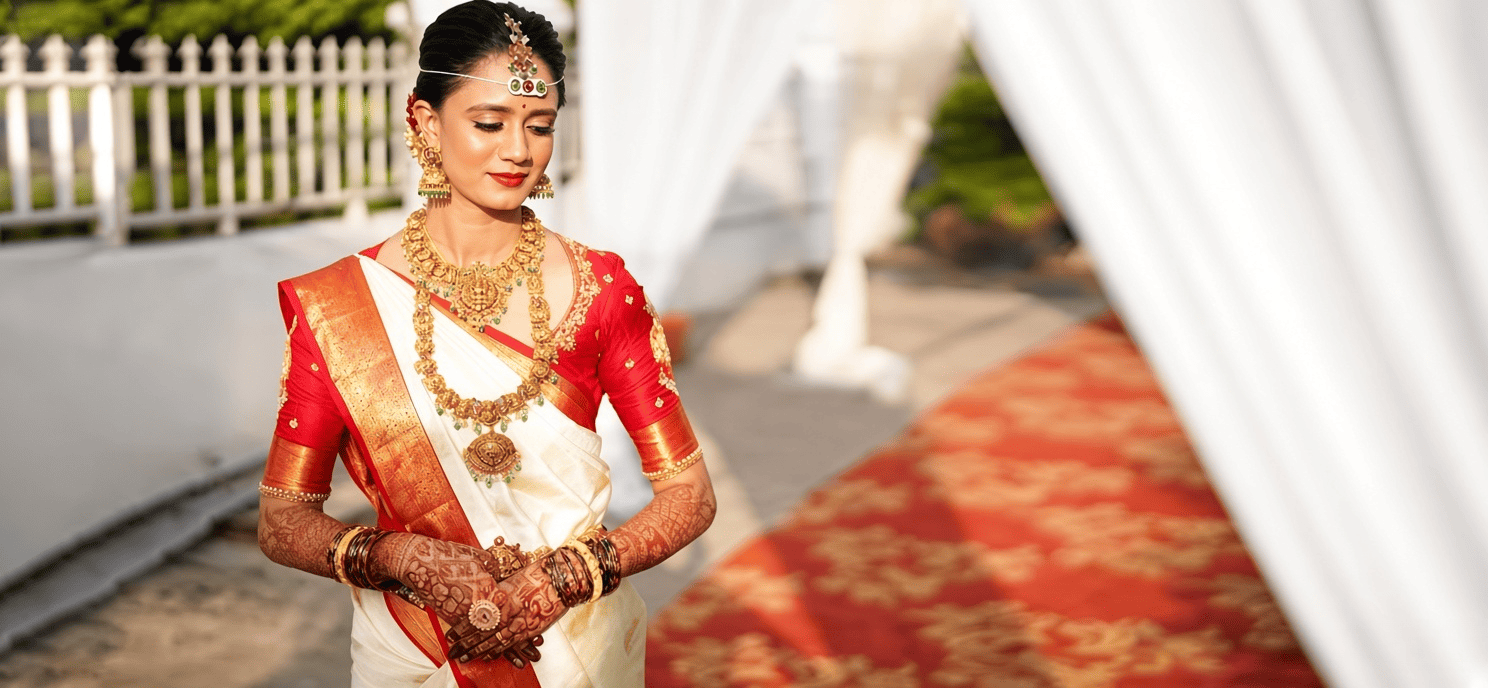
3) Kerala Kasavu (set saree)
The Kerala Kasavu saree is the definition of quiet luxury: typically off-white or cream with a gold-toned border (kasavu). It’s deeply tied to Kerala’s festive dressing and looks especially striking with temple jewelry and fresh flowers.
What to love:
- Clean, bright palette that flatters gold jewelry
- Lightweight feel, ideal if you dislike heavy sarees
- Timeless, distinctly Kerala aesthetic
Best for: pre-wedding functions, day ceremonies, or brides who want a traditional Kerala look.
Smart styling tip: Add a rich contrast blouse (deep green, maroon, or gold) for a more bridal finish while keeping the saree traditional.
4) Gadwal saree
Gadwal sarees (from Telangana) are loved for their contrast storytelling, often a lighter body paired with a richly woven border and pallu. Many are woven with a cotton base and silk borders/pallu, making them comfortable while still looking ceremonial.
What to love:
- Lighter wear compared to heavier pure silks
- Bold borders that give a bridal frame in photos
- Great balance of comfort and grandeur
Best for: daytime wedding rituals, pujas, or functions where you’ll be moving around a lot.
Smart styling tip: Choose a border color that matches your main jewelry set so the entire look feels intentional.
5) Dharmavaram silk saree
From Andhra Pradesh, Dharmavaram silk sarees are known for their gleaming silk, broad borders, and grand pallus, often with traditional, temple-inspired sensibilities.
What to love:
- A dramatic pallu that looks regal from every angle
- Rich sheen and dense zari presence
- Perfect for a “bridal entry” moment
Best for: main wedding ceremony or reception if you want maximum impact.
Smart styling tip: Keep pleats slightly wider so the silk’s shine reads clearly in photos (especially under LED lighting).
6) Pochampally Ikat saree
Pochampally ikat (Telangana) is instantly recognizable for its geometric rhythm and crisp patterning. The signature comes from resist-dyeing yarns before weaving, creating patterns that feel both traditional and modern.
What to love:
- Bold, graphic identity, great if you want something different from classic zari-heavy silks
- Works beautifully in silk or cotton-silk blends
- Great for brides who love color and design
Best for: engagement, sangeet, mehendi, or a contemporary wedding wardrobe.
Smart styling tip: Let the saree be the print, choose simpler jewelry and a solid blouse to avoid visual overload.
7) Uppada Jamdani saree
Uppada sarees (Andhra Pradesh) are prized for their airy feel and refined weaving. Uppada Jamdani-style work often features delicate motifs that appear almost “floated” onto the fabric.
What to love:
- Lightweight bridal option that still feels luxurious
- Subtle motifs that look expensive without shouting
- Easy to carry for long ceremonies
Best for: brides who want silk elegance but don’t want a heavy drape, or for summer weddings.
Smart styling tip: A textured blouse (brocade, raw silk, or beadwork) adds bridal richness without weighing down the look.
8) Venkatagiri saree
Also from Andhra Pradesh, Venkatagiri sarees are known for their fine weave and comfortable drape. They’re often chosen for functions where you want tradition and ease in equal measure.
What to love:
- A neat, refined finish that doesn’t feel stiff
- Comfortable enough for extended wear
- Often features elegant motifs and tasteful borders
Best for: wedding rituals, temple visits, family functions during the wedding week.
Smart styling tip: If you’re wearing a lighter Venkatagiri, elevate the look with a traditional waist belt (oddiyanam) and layered necklaces.
9) Ilkal saree
From Karnataka, Ilkal sarees have a distinct identity, often recognized by their border style and pallu treatment. They can be a meaningful choice if you want a strongly regional look that isn’t the usual bridal default.
What to love:
- Distinctive traditional design language
- Looks especially beautiful with heritage jewelry
- A lovely cultural nod for Karnataka families
Best for: pre-wedding functions, traditional ceremonies, or brides including multiple regional outfits.
Smart styling tip: Choose a blouse in the pallu color to make the look cohesive and photograph-ready.
10) Nine-yard bridal saree (Madisar/Koorai-style traditions)
In parts of South India, particularly in Tamil and Marathi-influenced communities in the South, nine-yard drapes are worn for their ritual significance and traditional presence. Depending on community customs, the fabric and styling can vary, but the statement is always unmistakably bridal.
What to love:
- Deeply traditional silhouette with strong cultural meaning
- Striking drape that stands out in wedding photos
- Often becomes a treasured keepsake because it’s tied to the ceremony
Best for: the main wedding ceremony if your family tradition includes a nine-yard drape.
Smart styling tip: Do a proper draping trial in advance (or book a drapist). Nine-yard sarees look incredible when the pleats and tuck points are secure.
How to choose the right South Indian bridal saree (without second-guessing later)
1) Start with the function, not the fabric
Ask yourself: When exactly am I wearing this?
- Main wedding ceremony: structured, heavier silks (Kanchipuram, Dharmavaram)
- Reception: statement silk or elegant minimal silk (Kanchipuram, Mysore silk)
- Daytime rituals: lighter silks or cotton-silk blends (Gadwal, Venkatagiri, Uppada)
- Pre-wedding events: ikat, lighter weaves, brighter palettes (Pochampally)
2) Pick a saree weight you can actually carry
A saree can be stunning on a hanger and exhausting on your shoulder after two hours. If you’re unsure, choose:
- Heavier saree + lighter jewelry, or
- Lighter saree + heavier jewelry
Avoid doing both heavy unless you’re used to it.
3) Use color strategically
Traditional doesn’t only mean red anymore. Many brides now choose:
- Deep jewel tones (maroon, emerald, royal blue)
- Gold-forward palettes for a classic temple-jewelry look
- Softer shades for reception (pastels, ivory, muted metallics) if it suits your ceremony and family preferences
4) Don’t overlook the blouse plan
A bridal saree often looks “complete” only after the blouse is right:
- Match the border color for a seamless look
- Contrast intentionally if the saree is minimal (Kasavu, Mysore silk)
- Consider sleeve length and neckline based on jewelry and body comfort
5) Buy from a reputable source and verify what matters to you
If you care about authenticity, pure silk, type of zari, origin, GI-tagged weaves, ask direct questions and request documentation where applicable. You don’t need to become a textile expert, but you should feel clear about what you’re paying for.
Care tips: how to keep your bridal saree wedding-ready for years
- Store silk sarees in a breathable cotton/muslin cover (avoid sealing in plastic long-term).
- Keep away from direct sunlight to prevent color fading.
- Refold occasionally to avoid permanent creases along the same lines.
- For zari-rich sarees, follow professional dry-cleaning guidance and avoid frequent cleaning unless necessary.
Suggested FAQ (add to the end of the blog)
1) Which saree is most traditional for a South Indian bride?
Kanchipuram (Kanjivaram) silk is one of the most iconic choices, but “most traditional” can also mean what your community wears, Kasavu in Kerala, nine-yard drapes in some Tamil traditions, or regional weaves like Gadwal, Dharmavaram, and Ilkal.
2) What’s the best South Indian bridal saree for summer weddings?
Lightweight options like Uppada, Venkatagiri, Gadwal (especially cotton-silk blends), and Kerala Kasavu are popular for warm-weather comfort while still looking ceremonial.
3) Can I wear an ikat saree as a wedding saree?
Yes, especially for engagement, mehendi, or reception. For the main wedding ceremony, many brides prefer heavier silk-and-zari styles, but a silk ikat can absolutely work if it matches the tone of your rituals and styling.
4) How far in advance should I buy my bridal saree?
If you’re also planning blouse stitching, jewelry matching, and drape trials, buying at least a few months ahead is practical. If the saree is being custom-woven or curated, you may need more time.
5) How do I make a simpler saree look more bridal?
Use bridal styling elements: a rich blouse, temple jewelry or layered gold, an oddiyanam (waist belt), fresh flowers, and a neat, secure drape. A Kasavu or Mysore silk can look unmistakably bridal with the right finishing.