Top 15 Traditional Sarees Across Different Indian States
If you’ve ever looked at two sarees that cost roughly the same and wondered why one feels “everyday” while the other feels like an heirloom, the answer is usually regional craft. In India, a saree is shaped by where it’s made local climate, fibre availability, weaving communities, dyeing traditions, and the kind of occasions people dress up for.
Some weaves are built for ceremony: structured silks, bold borders, heavy pallus. Others are meant to be lived in: crisp cottons, soft embroideries, light blends that don’t fight the weather. The result is an incredible range of regional sarees of India each instantly recognisable once you know what to look for.
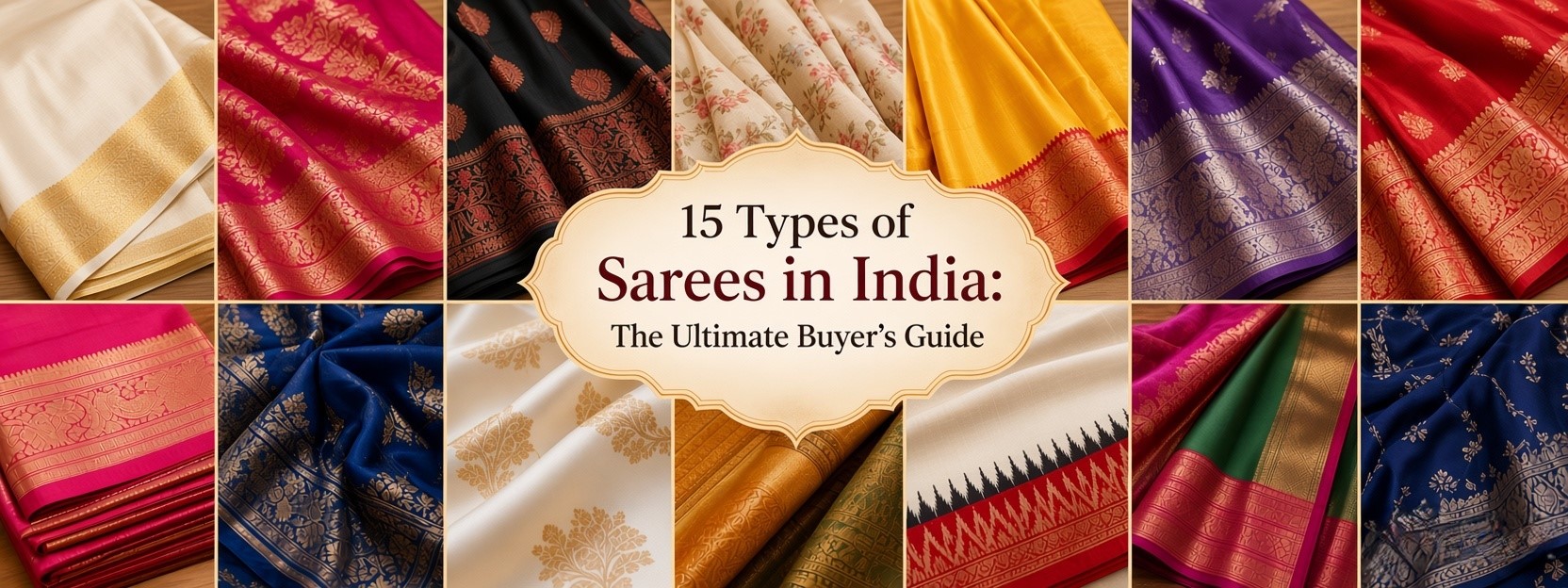
Below are 15 famous types of sarees in India, explained in a practical way: how they look, what they’re known for, and when they fit best. (Sequence starts with Gujarat, then travels across states.)
How to choose among traditional Indian sarees
Before the list, here’s a quick “buyer’s lens” that makes everything easier:
- For weddings & big evenings: look for silk, zari, brocade, strong borders and pallus.
- For day functions & summer: lean toward cotton, silk-cotton, light weaves, embroidery, minimal zari.
- For office & regular wear: choose breathable fabrics and patterns that aren’t too loud at close range.
- For a long event: consider weight and drape control a beautiful saree is only beautiful if you can carry it comfortably.
1) Bandhani Saree - Gujarat
Bandhani is created by tying tiny points of fabric before dyeing, producing dotted patterns that can be delicate or boldly festive. It’s energetic, colourful, and strongly associated with celebration.
You’ll recognise it by: neat dot clusters arranged into waves, grids, or traditional layouts.
Where it shines: Navratri, mehendi/haldi, festive day events, summer weddings.
Wear it well: keep accessories simple if the colour is bright; let the pattern and colour do the work.
2) Patola Saree - Gujarat
Patola is one of India’s most complex ikat traditions, known for sharp, planned motifs and a confident geometric look. It reads “statement” even when the colours are traditional.
You’ll recognise it by: bold, precise motifs (often geometric with traditional figures/animals/florals).
Where it shines: weddings, milestone functions, collecting-worthy festive wear.
Wear it well: a plain blouse in one of the saree colours usually looks more refined than heavy embellishment.
3) Paithani Saree - Maharashtra
Paithani sarees are loved for their rich silk, detailed borders, and signature motifs peacocks, parrots, lotuses, vines. They’re festive, but not chaotic; grand, but still graceful.
You’ll recognise it by: a decorative pallu and traditional motif language.
Where it shines: weddings, pujas, festival evenings, family ceremonies.
Wear it well: a traditional blouse works beautifully, but Paithani also pairs well with a clean, modern neckline.
4) Kanjivaram Saree - Tamil Nadu
Kanjivaram (Kanchipuram silk) is known for its weight, lustre, contrasting borders, and strong zari presence. It’s a saree that holds shape perfect when you want your drape to look crisp all day.
You’ll recognise it by: bold contrast borders, rich silk body, temple-inspired design sensibility.
Where it shines: South Indian weddings, major ceremonies, bridal wardrobes.
Wear it well: prioritise a neat drape and balanced jewellery this saree already looks “complete.”
5) Kasavu Saree - Kerala
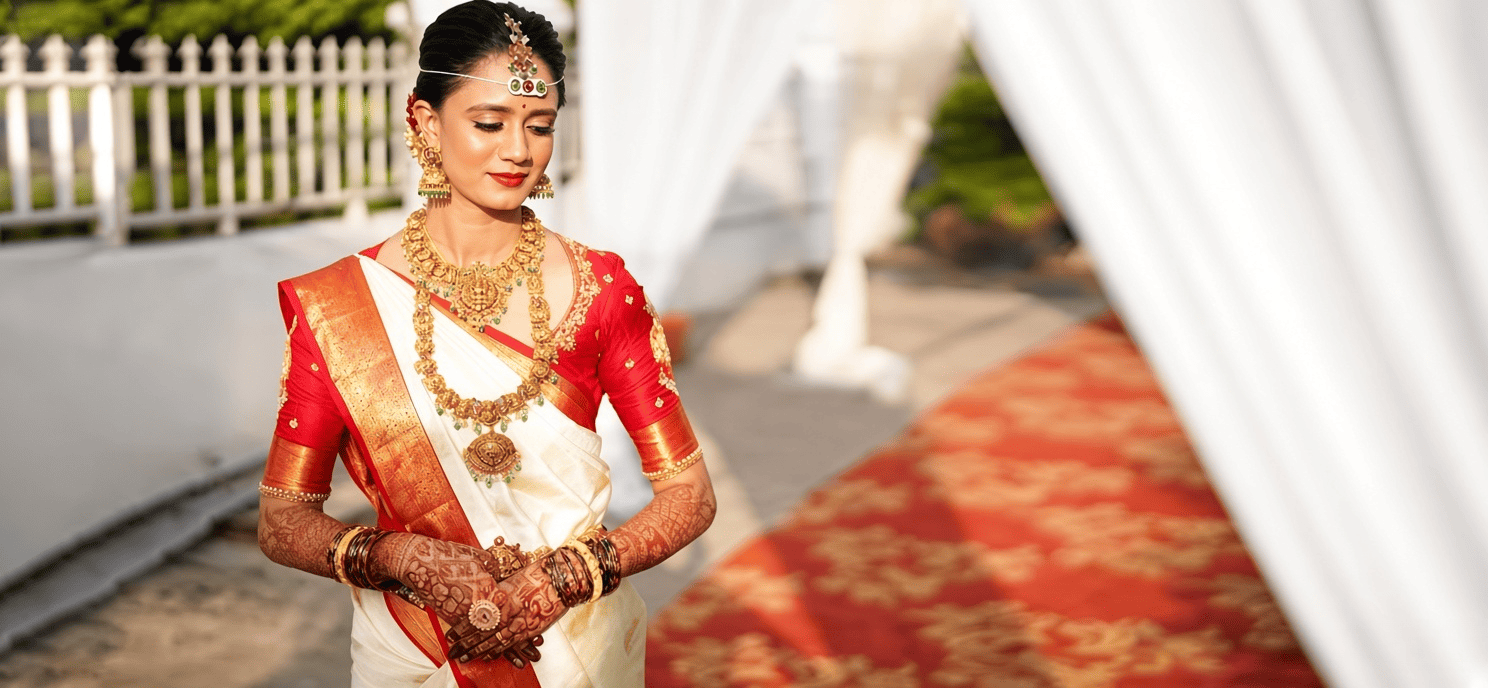
Kasavu sarees are typically off-white or ivory with a gold border. They’re proof that you don’t need heavy work to look traditional and special especially in daylight functions.
You’ll recognise it by: clean base + gold border, quiet richness.
Where it shines: Onam, Vishu, Kerala weddings, temple occasions.
Wear it well: gold accessories and jasmine flowers are classic; a deep-toned blouse can modernise it without losing tradition.
6) Gadwal Saree - Telangana
Gadwal sarees are admired for combining a wearable body with a richer contrasting border and pallu. They’re a smart pick when you want traditional impact without carrying something very heavy.
You’ll recognise it by: contrast borders and a “light-to-wear, rich-to-look” feel.
Where it shines: pujas, weddings, formal traditional events.
Wear it well: match your blouse to the pallu or border for a cohesive look.
7) Pochampally Ikat Saree - Telangana
Pochampally is famous for ikat patterns especially bold geometric designs that feel contemporary while still being handloom at heart. Many people choose it as an everyday-to-occasion saree.
You’ll recognise it by: clean geometry and strong pattern blocks.
Where it shines: office wear, cultural events, daytime functions.
Wear it well: a structured blouse (boat neck, high neck) complements the geometry.
8) Banarasi Saree - Uttar Pradesh
Banarasi sarees from Varanasi are a benchmark for grandeur. Brocade work, floral jaals, zari borders Banarasi is often the first saree people think of for North Indian bridal wear.
You’ll recognise it by: rich brocade surface and traditional zari patterning.
Where it shines: weddings, receptions, formal evenings, festive celebrations.
Wear it well: if the saree is heavy, scale down jewellery and let the weave take center stage.
9) Chikankari Saree - Uttar Pradesh
Chikankari is known for delicate hand embroidery and an airy, refined feel. It’s often chosen for warm-weather elegance when you want craft without heaviness.
You’ll recognise it by: soft, detailed embroidery (often floral) and a gentle overall look.
Where it shines: summer weddings, daytime functions, formal lunches, graceful workwear.
Wear it well: pearls, silver, or minimal gold keep the look understated and polished.
10) Chanderi Saree - Madhya Pradesh
Chanderi is beloved for being light on the body and elegant to the eye. Often made in silk, cotton, or blends, it’s a reliable choice for daytime celebrations especially in warmer months.
You’ll recognise it by: airy drape, subtle sheen, small motifs and fine zari accents.
Where it shines: festive mornings, summer weddings, office celebrations.
Wear it well: keep styling “light” a well-tailored blouse and minimal jewellery look best.
11) Sambalpuri Saree - Odisha
Sambalpuri sarees are made using ikat techniques where patterns are planned into the yarn before weaving. The result is a distinct, artisan look that works for both daily wear and occasion dressing.
You’ll recognise it by: ikat motifs with a handcrafted, design-built-into-thread feel.
Where it shines: office-to-festive wear, cultural events, handloom collections.
Wear it well: oxidised jewellery pairs beautifully with cotton; silk versions can take gold accessories.
12) Bomkai Saree - Odisha
Bomkai (also known as Sonepuri in many contexts) blends traditional weaving with bold motif placement. It can look earthy in cotton or more ceremonial in silk.
You’ll recognise it by: decorative borders and pallus with cultural motifs (often florals, fish, temple elements).
Where it shines: pujas, ceremonies, festive events.
Wear it well: pull one border colour into your blouse simple, flattering, and put-together.
13) Tant Saree - West Bengal
Tant sarees are designed for comfort: breathable cotton, crisp finish, and bold borders. It’s the kind of saree that looks “dressed” even when it’s an everyday pick.
You’ll recognise it by: airy cotton body and strong border language.
Where it shines: daily wear, summer, workdays, pujas.
Wear it well: a clean drape and a simple blouse often look more elegant than heavy accessories.
14) Baluchari Saree - West Bengal
Baluchari sarees are known for woven narrative scenes often mythological typically displayed on the pallu. It’s a saree people notice up close because the details invite attention.
You’ll recognise it by: figurative woven scenes and a “heritage art” feel.
Where it shines: cultural events, formal evenings, weddings with a traditional dress code.
Wear it well: a plain blouse helps the pallu remain the highlight.
15) Muga Silk Saree - Assam
Muga silk is treasured for its natural golden tone and dignified glow. It’s often chosen as a keep-forever saree because it feels special without needing heavy embellishment.
You’ll recognise it by: warm natural sheen and an heirloom-like presence.
Where it shines: weddings, milestone events, cultural ceremonies.
Wear it well: gold jewellery complements Muga silk beautifully, but you can also keep it minimal and still look finished.