Traditional Sarees of Maharashtra: Paithani, Nauvari, and Other Marathi Weaves
Maharashtra’s textile map is not one “Marathi saree.” A wedding Paithani from Paithan or Yeola, a nine-yard Nauvari on Gudi Padwa in Pune, a Khun blouse from the Deccan, and a saw-tooth Karvath Kathi from Vidarbha are different objects: different towns, looms, and days of the year.
If you treat them as a single festive look, you will buy the wrong weight, the wrong drape, and sometimes a printed peacock sold as Paithani. This guide separates the main traditional sarees of Maharashtra — what they are, where they are from, and how they are still worn.
Weave, drape, and blouse cloth are not the same thing
Before the names, three distinctions save money.
A named weave (Paithani, Karvath Kathi, many Puneri and cotton handlooms) is a way of making cloth, tied to a place.
Nauvari is mainly a drape: nine yards, kashta/dhoti-style, often without a petticoat. The same drape can be cotton or silk. It is not a GI motif by itself.
Khun (khan) is historically a Maharashtrian blouse and dress fabric — checks, temple borders, a particular sheen — more often seen as a choli than as a full heirloom pallu. Calling every shiny checked blouse a “Khun saree” stretches the word.
Shop for the job: ceremonial silk, festival mobility, everyday cotton, or a regional blouse.
Why these drapes still show up on the Maharashtrian calendar
In much of the state, the saree is still timed to the event, not only to a moodboard.
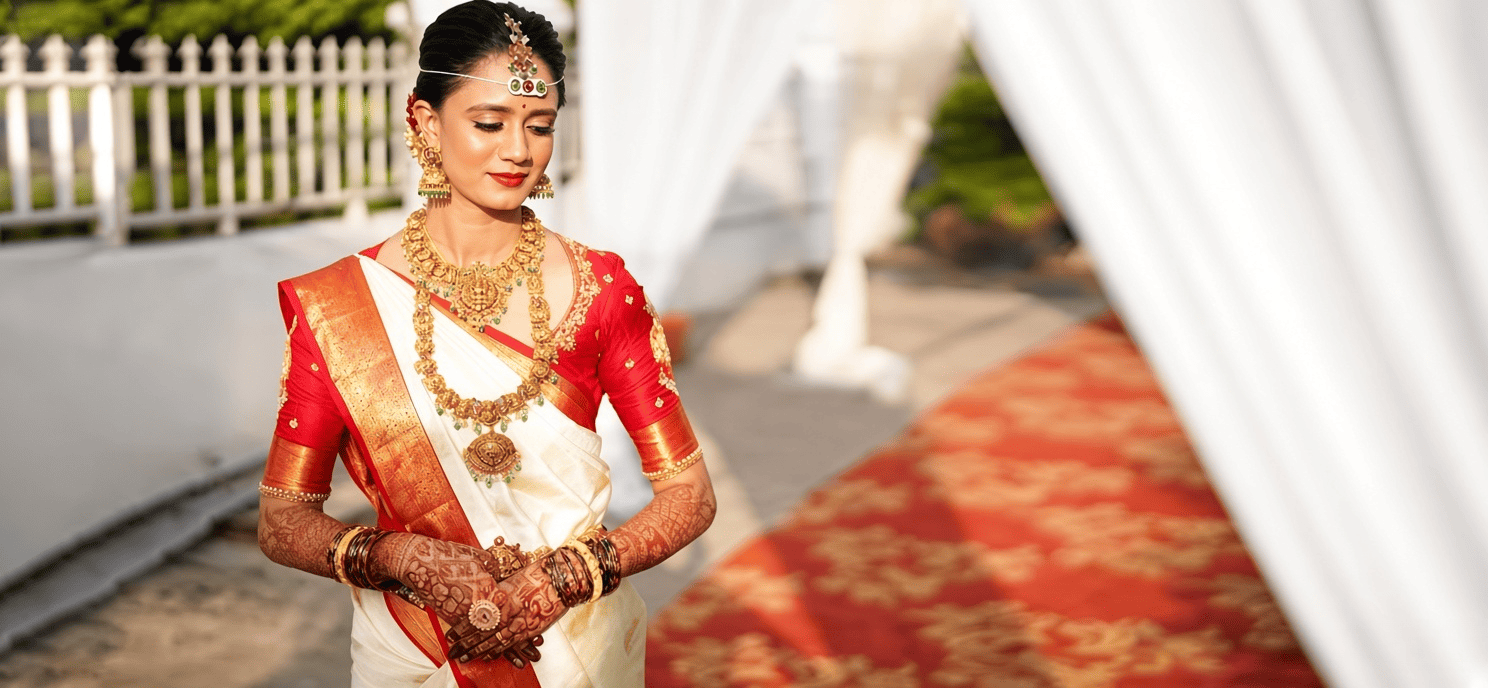
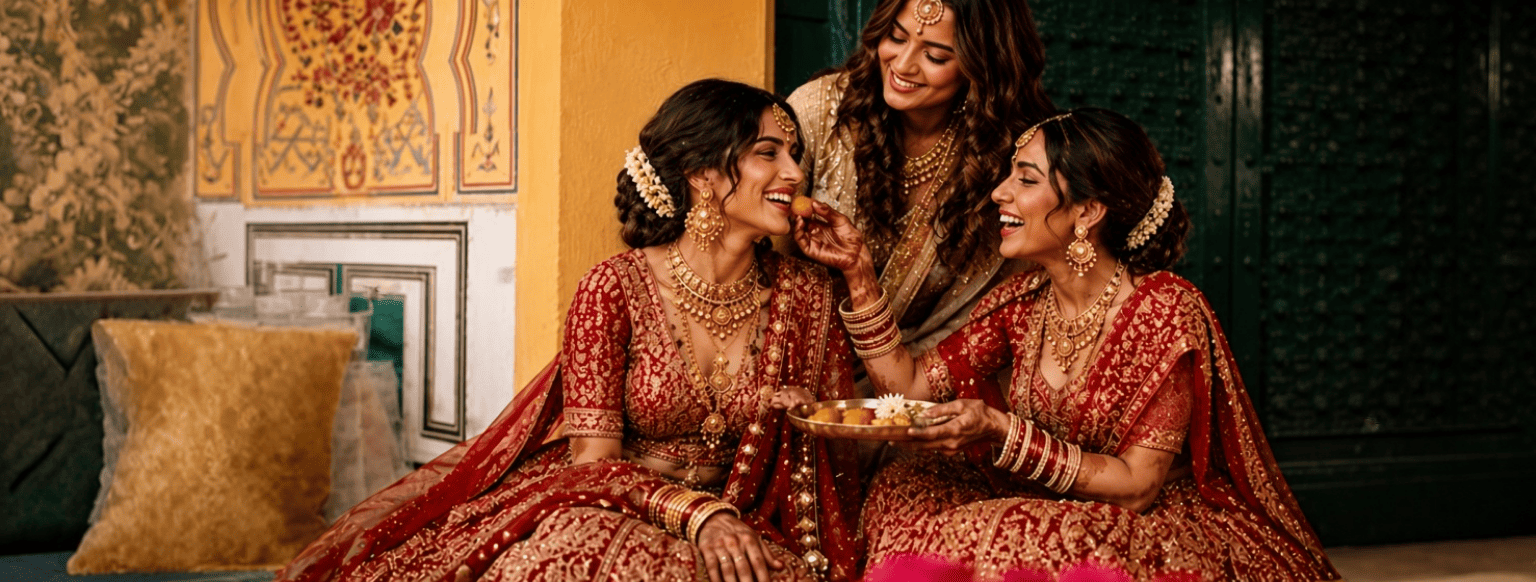
- Weddings and formal receptions: Paithani, heavier silks, full jewellery (nath, green bangles, often a Kolhapuri saaj)
- Gudi Padwa, Ganeshotsav, many pujas: Nauvari or a festive six-yard; cotton or silk depending on heat and dance
- Lavani and some folk stages: Nauvari, because the kashta drape is built for movement
- Weekdays and heat: lightweight cotton handlooms, including locally worn everyday weaves
Motifs are not random decoration. Lotuses, peacocks, vines, and temple-like borders sit in a Deccan visual language you also see in painting and metalwork. That does not mean every peacock print is Paithani.
1. Paithani — Paithan, Yeola, and the silk people mean by “Marathi bridal”
If one weave is treated as the ceremonial face of Maharashtrian sarees, it is Paithani.
Where: Traditionally Paithan (Aurangabad / Chhatrapati Sambhajinagar district) on the Godavari, with a major living centre in Yeola (Nashik district). When people in Maharashtra say they are “going for Paithani,” they often mean a Yeola or Paithan loom, not a generic silk counter in another state.
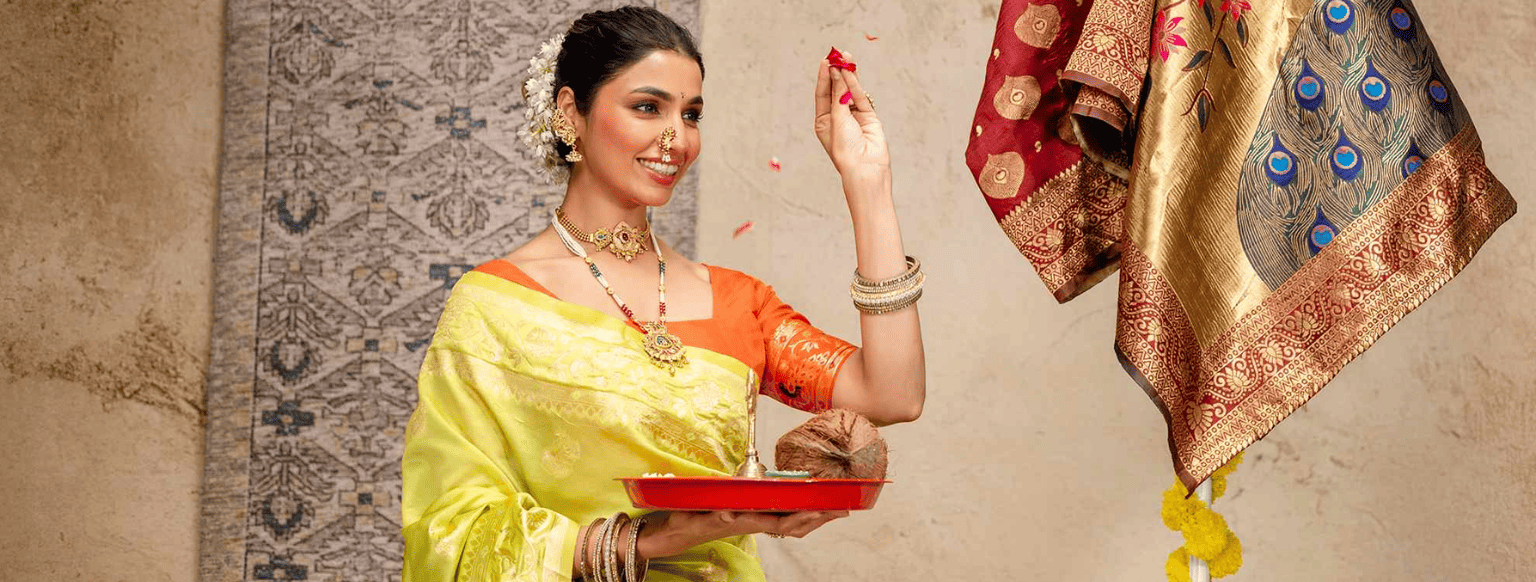
What you see: Silk, gold or silver zari, a distinctive pallu. Peacock (mor), lotus, and related tapestry-style motifs are the famous ones; borders have their own grammar (including well-known types collectors discuss by name). The pallu is often the reason you bought it.
How it is made: Handwoven, frequently with a tapestry-like interlocking of colours so motifs are built in the cloth, not stamped on later. Time depends on density. A seriously worked piece is slow. That slowness is why families still treat a good Paithani as something to fold away and pass on — and why a three-day “Paithani” at a bargain price is usually a different product.
When to wear it: Marathi weddings, important pujas, formal festive evenings. It is the wrong tool for a humid office Tuesday.
How to buy without getting a print:
- Ask whether the pallu motifs are woven
- Look at the reverse; woven colour changes have structure
- Weight and zari should match the price story
- A plain, well-cut blouse usually beats a second gold forest on the choli
If you only add one Maharashtrian heirloom, this is the usual candidate — provided you are buying the weave, not the word.
2. Nauvari — the nine-yard kashta drape (Pune to the coast)
Nauvari (navyari, nine yards) is the drape most non-Marathi eyes recognise as “Maharashtrian”: pleats arranged so the cloth works more like a dhoti through the legs, traditionally without a separate petticoat.
Where you see it: Statewide, with a strong public presence in Pune on Gudi Padwa, during Ganeshotsav, in Lavani, and in Koli and other coastal performance contexts. It is a living festival uniform, not only a museum costume.
Cloth: Cotton for heat and dance; silk for weddings and formal Navvari looks. Borders are often assertive — red, green, maroon — but that is styling, not a single GI weave.
Why the length: Extra cloth is what makes the kashta possible. Popular memory links the drape to mobility — including Maratha women’s dress and figures such as Rani Lakshmibai in public storytelling. Treat that as cultural association, not as a documented pattern for every historic battlefield. What you can say in the fitting room is simpler: this drape is stable when you walk, climb, and perform, which is why it survived as festival and stage wear.
How it is worn: Kashta / dhoti-style, with the lower arrangement between the legs, pallu typically more compact than a long Nivi trail. It takes practice. A first Nauvari should be tried at home, not invented in a mandap bathroom.
Blouse: Often a fitted choli; Khun cloth is a classic pairing. Jewellery can be full Marathi bridal or lighter festive — nath and green bangles still read immediately as the region.
Do not confuse “Nauvari” with “Paithani.” You can drape a silk Nauvari; you can also wear a Paithani in six-yard Nivi. They are not synonyms.
3. Khun — Deccan blouse cloth that reads as Maharashtrian
Khun (also spelled khan) is a traditional handwoven fabric of Maharashtra, strongly associated with blouses: a characteristic sheen, checks or small patterns, temple-style borders.
Where: Maharashtra’s handloom belt — Solapur and other Deccan centres are commonly mentioned in the trade. You will see Khun cholis in Pune and Mumbai wardrobes as a default “this is a Marathi blouse,” even on a plain cotton or silk six-yard.
How it is used now: Mostly as a blouse; sometimes as smaller textiles. A simple saree plus a Khun choli is a recognisable everyday-to-festive Maharashtrian combination, cheaper and more repeatable than a full Paithani.
Buy it for: Identity without bridal weight. Pair with cotton, silk-cotton, or a quiet silk. Let the blouse’s check and border do the regional signalling.
4. Everyday cotton, including lighter handlooms (kaghadi and kin)
Not every Maharashtrian saree is zari.
Across the state, lightweight handloom cotton — checks, stripes, modest borders — is what heat and work actually get worn. Some local trade names, including kaghadi-type cottons, sit in this everyday group: breathable, washable, not trying to be Paithan.
Wear them when the day is long and the invitation is not a wedding card. They are the honest counterpart to silk, and they support the same weaving economy without requiring an heirloom budget.
If a seller cannot explain the yarn and the loom, treat “heritage cotton” as a mood, not a certificate. Judge fall, colour fastness, and whether you can sit in it.
5. Karvath Kathi — Vidarbha’s saw-tooth border
Karvath Kathi (karvat / karvati: saw) is a Vidarbha weave known for a saw-tooth or temple-tooth border, often with zari, on silk or silk-cotton.
Where: Eastern Maharashtra — the Vidarbha region (including areas around Bhandara and neighbouring weaving pockets). It is less famous on national bridal Pinterest than Paithani, which is exactly why it is worth naming correctly.
Wear it when you want a Maharashtrian silk that is not a peacock pallu. Formal festive and ceremonial, depending on weight.
Watch for: any zigzag print labelled Karvath Kathi. The interest is in the woven border rhythm.
Historically it is discussed in connection with elite and ritual wardrobes in the region. You do not need a palace story to justify the cloth. The border is the identifier.
6. Puneri — Pune’s quieter signature
The Puneri saree is associated with Pune: typically a cleaner body, a relatively narrow border, and a pallu that is elegant rather than pictorial.
Cloth: Cotton or silk, handwoven in the better pieces. It sits between everyday and festive — practical enough for a city function, finished enough not to look like workwear.
Wear it when you want a Maharashtrian look without Nauvari complexity or Paithani weight. It is a strong “I have somewhere to be in Pune” drape.
Do not expect every saree sold in a Pune shop to be a Puneri weave. The city sells everything. The name refers to a local style, not a mall.
Other textiles you will meet on the same rack
Maharashtra’s wardrobe also borrows and neighbours:
- Himroo (Aurangabad) — a cotton-silk brocade tradition, more often fabric than a six-yard “type” in popular lists
- Border weaves shared with Karnataka and Telangana markets (Ilkal, Narayanpet) that Maharashtrian families wear without them being “from Pune”
- Contemporary six-yard silks worn Nivi with a Marathi blouse and nath — culturally Maharashtrian in styling, not in loom
A complete cultural picture includes these. A shopping list should still separate “woven in this tradition” from “worn at this wedding.”
How Maharashtrian sarees are draped
Nivi (six-yard) is now common in Mumbai, Pune, and most urban weddings, including with Paithani. Pleats in front, pallu over the left shoulder. This is the drape most tailors assume.
Nauvari / kashta is the regional signature: nine yards, lower drape through the legs, traditionally no petticoat. It is a skill. If you are performing Lavani or walking a visarjan, this is the functional choice.
Brides sometimes mix: Paithani silk, Nauvari drape, or Paithani in Nivi with a contemporary blouse. None of those is “wrong.” What fails is a nine-yard attempt with six yards of cloth, or a heavy Paithani pallu treated like a weightless chiffon.
Blouse, jewellery, and footwear that complete the geography
You can signal Maharashtra without a lecture.
- Nath (nose ring) and often a nathni chain
- Green glass bangles, especially with festive red/green palettes
- Kolhapuri saaj or other regional gold for weddings
- Mundavalya for the wedding couple
- Kolhapuri chappals when the event and the hem allow
- Khun or simple silk blouse rather than a random sequin crop under a Paithani
If the saree is a pictorial Paithani pallu, keep the blouse quieter. If the saree is a plain Puneri or cotton, the Khun blouse can be the interest.
Why the weaves are still in use (without the brochure adjectives)
They survive because they still have jobs.
Paithani still marks a Marathi wedding in a way a generic georgette does not. Nauvari still works for processions and stage. Cotton handlooms still match the state’s heat. Buying from living centres — Yeola, Paithan, Vidarbha looms, Pune’s better cotton — is how the craft stays a job, not only a hashtag.
“Eco-friendly” is true of many handlooms compared with disposable partywear, but only if the piece is actually handwoven and worn more than once. A polyester “Paithani print” worn once is not a heritage purchase.
How to choose, in one pass
| Need | Look at |
|---|---|
| Marathi wedding, heirloom | Real Paithani (Paithan / Yeola), woven pallu |
| Gudi Padwa, Ganpati, Lavani | Nauvari (cotton or silk), learn the kashta |
| Everyday heat | Lightweight Maharashtrian cotton / kaghadi-type handloom |
| Regional blouse identity | Khun choli |
| Formal silk that is not a peacock pallu | Karvath Kathi (Vidarbha) |
| City festive, less weight | Puneri-style cotton or silk |
Buy from someone who can name the town and the technique. For expensive silk, prefer a seller who will still be there after the wedding. Look at the reverse, the pallu, and the fall — not only a studio peacock.
Traditional sarees of Maharashtra are a set of places: Paithan and Yeola for Paithani, Pune for Puneri and public Nauvari, Vidarbha for Karvath Kathi, the Deccan looms for Khun and everyday cotton. Learn the place and the job of the cloth. The festival calendar will tell you the rest.
If you are choosing one next, decide whether you need a woven heirloom, a nine-yard you can walk in, or a cotton you will wash. Then go to the tradition that does that job — not to a single “Maharashtrian saree” label on a print.
Frequently Asked Questions
What is the most famous saree of Maharashtra?
Paithani, especially from Paithan and Yeola, is the ceremonial weave most people mean. Nauvari is equally famous as a drape, particularly at Gudi Padwa and in performance.
Is Nauvari a type of silk?
No. Nauvari means a nine-yard drape. It can be cotton or silk. Paithani is a silk weave. You can combine them; they are not the same word.
Where should I buy an authentic Paithani?
From weavers or trusted retailers linked to Paithan or Yeola, or a specialist who can show woven work and stand behind the piece. A printed peacock is not a Paithani.
What do women wear for Gudi Padwa in Pune?
Many wear Nauvari, often in bright festive colours, with traditional jewellery. Six-yard festive sarees are also common. The public image of the day is still strongly Nauvari.
What is Khun used for?
Traditionally as Maharashtrian blouse fabric — checks, sheen, temple borders. A Khun choli with a simpler saree is a classic regional look.
What is Karvath Kathi?
A Vidarbha weave known for a saw-tooth (karvat) border, often with zari. It is a Maharashtrian silk tradition distinct from Paithani’s pallu language.
Can I wear a Paithani in a normal six-yard drape?
Yes. Most urban weddings do. Nauvari is optional, not mandatory, with Paithani.
Which Maharashtrian saree is best for everyday wear?
Lightweight cotton handlooms — including everyday weaves sold under local names such as kaghadi-type cottons — not heavy Paithani.
What jewellery goes with these sarees?
Nath, green bangles, and for weddings often Kolhapuri saaj and mundavalya. Match metal and volume to the cloth: full sets with Paithani; lighter with cotton and Puneri.